Embracing Analog: The Ineos Grenadier
Amazing things are happening in the automotive industry, as Waymos drive us around town without human drivers and without a drop of petrol. Increasing tech-powered automation and decreasing coefficients of drag are unavoidable as they usher in disappointingly less style and less human involvement in the act of driving. As a chronic technologist and EV enthusiast, I have a lot of passion for how technology can improve transportation; as an automotive enthusiast, I love character and tradition.
For some, driving brings joy. A connection with the vehicle and the road or terrain enhances our experience. Walking into a garage and smiling at what you see, because you appreciate the style or the history or the people behind a vehicle is important to us. It doesn’t mean aversion to new cars or to automotive tech, but it might mean thinking differently when selecting a new vehicle.
In rare cases, a car catches someone’s eye, and the draw is irresistible.
That’s exactly what happened to me as I wanted to downsize from a full-size EV pickup truck to something smaller. I stumbled across a vehicle with a rich origin story, an unexpected balance between analog and digital, and a design that makes me smile every time I step into the garage.
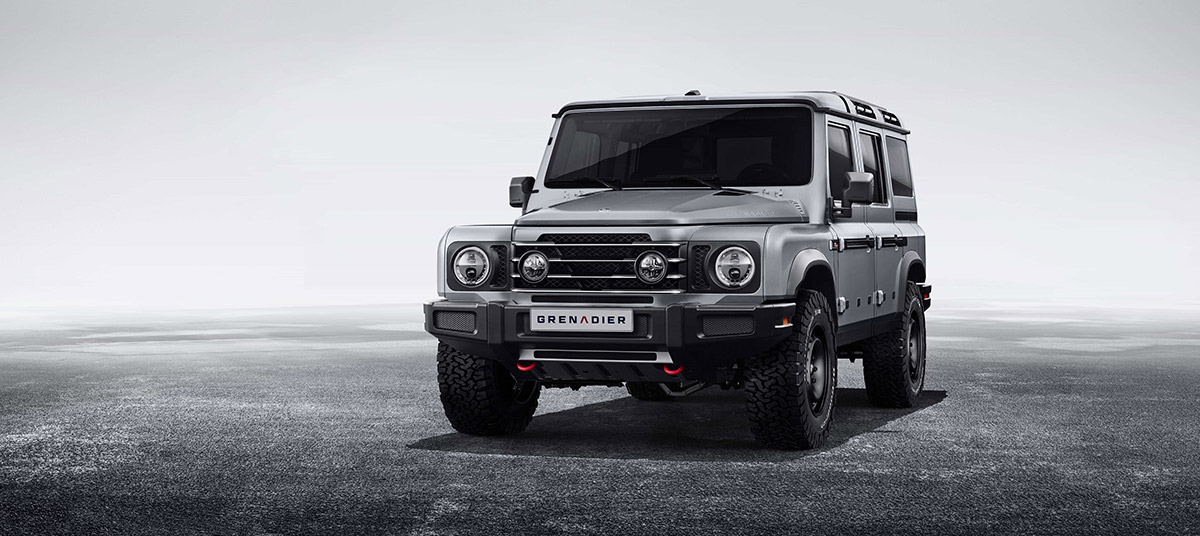
Against the tides of tech and counter to contours, I bought an Ineos Grenadier.
Origin Story
Ineos Automotive and Grenadier are names that most people have never heard.
The Grenadier’s story begins with the loss of an icon: on January 29, 2016 the last Land Rover Defender rolled off the production line, ending 67 years of continuous production of one of the most capable, trusted vehicles. Over two million were built since production of the original “Land-Rover” began on July 19, 1948 with a truck built for England’s King George VI.
Defenders were loved by people around the world for their durability, capability, and in-the-field repairability. They were driven on every continent, served in wars, and were a favorite work truck on farms. Top Gear’s Richard Hammond did a brief documentary about Land-Rover #1, code named JUE 477, which gives a peek at the Grenadier.
The classic Defender’s end came in part because of increased regulatory emissions and safety requirements that the aging platform could not adapt. A successor was announced for a different market. Contoured for aerodynamics, loaded with tech, and cushioned for a luxurious ride to the nearest country club, the new Defender was a six-figure marshmallow to enthusiasts.
One such enthusiast was Sir Jim Ratcliffe, the CEO of chemical giant Ineos and one of Britain’s wealthiest citizens. Outside the chemical industry, Ratcliffe is famous for co-ownership of Manchester United Football Club, America’s Cup’s Brittania, and the Mercedes-AMG PETRONAS Formula 1 Team. Ineos provides fuels for F1 events.
Ratcliffe is a Defender fan of the highest order. He believed that the luxury-oriented new Defender was a step in the wrong direction, and that the world needed the simple, durable Defender of years past. So he approached Jaguar-Land-Rover and offered to buy the tooling and designs so that he could continue building them.
JLR declined. Ratcliffe decided to do it himself.
In 2017, he met with a few colleagues and friends at a pub in Central London called The Grenadier. It was here that they discussed the idea of creating a spiritual successor to the beloved Defender. Ineos Automotive was created to do exactly that, with their first vehicle bearing the name of the pub: The Ineos Grenadier.
When JLR noticed Ineos’ progress, they sued. Ineos responded with a brilliant ad campaign which saw this billboard right in front of JLR’s headquarters.

The courts decided in Ineos’ favor. With the legal victory, the Grenadier’s road to global markets was cleared. That road is a long one when a vehicle isn’t a new model year of an existing vehicle line. It’s not even an existing manufacturer. The Grenadier was a ground-up effort to satisfy a need of passionate drivers who want something quite different from anything on the market today.
“The idea behind the Grenadier is to develop an uncompromising, no frills, no fuss 4x4 that provides the best‑in‑class off‑road capability, durability and utility”.
-Sir Jim Ratcliffe, Ineos CEO
Ineos markets the Grenadier as “BUILT ON PURPOSE.” and “BUILT FOR MORE.” It’s a capable four-wheel-drive SUV, but it doesn’t sacrifice utility in favor of extreme off-roading. A Grenadier will happily crawl over rocks and plow uphill through mud, but it still tows over 7,700 pounds. It’ll wade through 800mm of water, but is comfortable to drive on the highway. I love things that are over-engineered, with capabilities just beyond my ability to exploit them. Enter the Grenadier.
The key is that it’s not just a good off-roader; it’s a capable, dependable work truck. I expect it’ll find a home on many farms, small businesses, and adventurers’ garages. This early ad from Ineos suggests that the working farm truck idea is important to them:
The importance of this diversity cannot be understated. Vehicles like the Jeep Wrangler and Ford Bronco (both of which I have owned) sacrifice towing, payload, and comfort to be great rock-crawlers. Like the original Defender, the Grenadier maintains much broader appeal. The “purpose” is not just extreme off-roading, but all manner of tasks that you put to it. I love things that are over-engineered, with capabilities just beyond my ability to exploit them, but I’m not willing to give up broad utility and some comforts.
To achieve this, Ineos set out to build a purpose-built 4x4 SUV that would be supremely well-built, simple enough to service in the field whenever possible, and charming enough to own for decades. In sourcing subsystems, Ineos looked to many best-in-class suppliers:
- Magna Steyr, an Austrian automotive company that has been building the Mercedes-Benz G-Wagon since 1979, is Ineos’ partner for Grenadier design and engineering. The connection between a classic Defender, a G-Wagon, and a Grenadier is obvious.
- BMW powers the drivetrain with the B58 inline 6-cylinder engine, renowned for its reliability. Ineos de-tuned it for extended service lifetime.
- ZF Friedrichshafen AG provides the transmission, Recaro provides seating, Carraro Group provides the solid axles, brakes by Brembo.
These components add up to a vehicle with incredibly well-built analog elements. A ladder-frame chassis for great hauling and towing, an engine easily capable of 300,000 miles, mechanical locking differentials, and high-end components appear throughout.
The Balance Between Analog and Digital
In his book Think More Analogue, Be More Digital, James Harris shared a famous quote:
“Digital makes you think; Analog makes you feel.”
This reminds me that just because something is digital, doesn’t always mean it’s better… or even good. The more tech, the more disposable products tend to feel because they become obsoleted quickly. Our phones and cameras are great examples; we upgrade them frequently to get the latest and greatest. This is happening to cars right now.
Ineos’ goals of keeping the vehicle as simple as possible and enabling owners to service them in the field led them to be very intentional about how much digital technology was part of the Grenadier. Since keeping this vehicle a bit longer is a priority for me, I thought hard about what balance I want between simple, robust design versus tech features as Ineos was readying the Grenadier for U.S. markets.
There is no going back to zero digital technology, short of buying an antique car. Some tech is important for safety, some is mandated by government regulations, and some is just nice to have (for me, that includes wireless Apple CarPlay). At the same time, cramming every control onto a single large touchscreen is not necessarily a better approach to cockpit design. Besides obvious cases like gloved hands, there is joy in flicking a switch that has a satisfying travel. We’ve evolved to value the audible “click” and the feel of travel at our fingertips.
Seeking a balance, I’ll forego some technology in favor of a more fun driving experience. Self-driving is something I don’t want, even after owning Teslas. I never use the built-in maps that manufacturers make us pay $1,000 for, or worse: a subscription. Most auto manufacturers’ software is poorly designed, with terrible interfaces. An opportunity to minimize that in favor of a more analog experience is welcome.
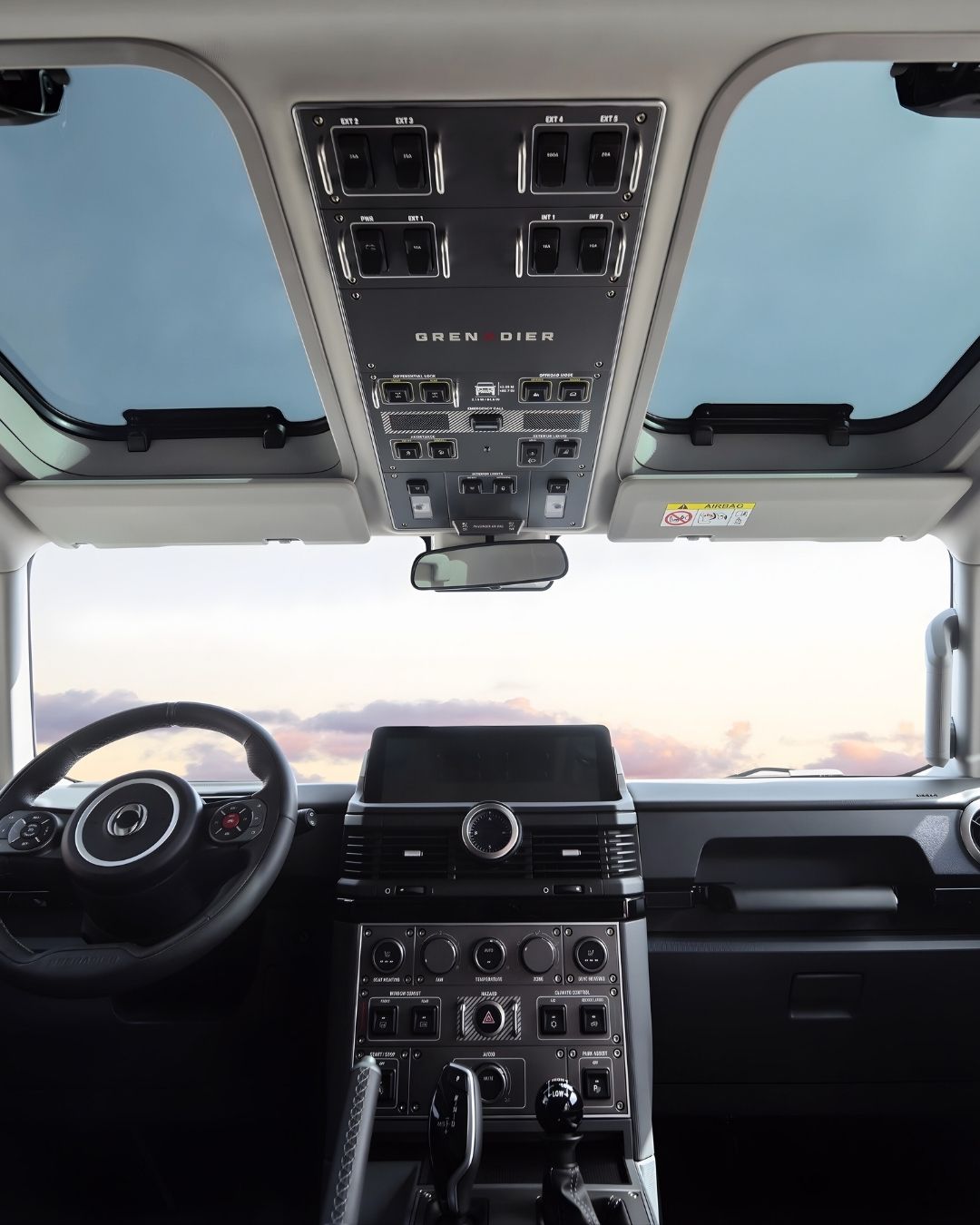
The ultimate embodiment of a Grenadier’s balance between analog and digital is in its cockpit, where you’ll find pleasantly bizarre juxtapositions between old-world and new. For example, there are no power seats (to avoid shorting out when wading through water), but the high-end leather seats are heated. Wireless Apple CarPlay is available, but there is no wireless charging pad, not even powered USB ports up front outside of the closed console storage box. There is cruise control, but the “old” kind that is unaware of your distance from the car in front of you. Fewer sensors and less software make for a simpler offering offset by arrays of beautiful, highly tactile switches in front of you and above.
The effect feels a lot like sitting in an aircraft cockpit, which didn’t go unnoticed by the Ineos marketing team…
The differential locks - which manage power distribution to the wheels - are mechanical instead of electronic. This results in a set of levers and buttons with actual throw instead of a pushbutton digital activation. To some, this might seem like an inconvenience. I remember the days of fully manually-locking hubs, when Dad would tell us kids to get out and turn a latch on the hub to engage a wheel lock. Grenadier delivers the perfect middle ground for me, while enabling differential repairs to be completed by most any mechanic.
A Grenadier’s door handles have a button that you press in with your thumb to unlock a mechanical latch. You can feel the latch disengaging. When you close the door, you slam it with a satisfying thunk. Nothing could be further from the auto-extending flush door handles of modern cars… the same ones that trap you inside if the power is lost. Analog wins in this case.
Electrochromatic glass roof that turns opaque at the tap of a button? No way. Not even a power sliding moonroof. Instead, a Grenadier has safari windows, which manually pop up or remove for capturing big game with a telephoto lens, which of course I’ll do often while sitting in Seattle traffic.
The steering in a Grenadier is based on a “Recirculating Ball Steering Box,” which is a mechanical system designed for great off-road control. On the road, it doesn’t self-center well, has a larger-than-average turning radius, and requires heavy input. If you steer with one finger or a knee, you won’t end up where you expected. It feels dated, because you have to keep your hands on the wheel instead of doomscrolling on your phone. I’m great with that.
Nowhere to be found are self-driving features. No autopilot, no lane-keeping steering control, no driver drowsiness monitors (pre-2026). Grenadiers include only government-mandated safety features like collision avoidance, anti-lock brakes, and lane-departure warning. Even pushbutton start is absent, in favor of a physical key that you put into the ignition and turn to start the car. I expected this might be an annoyance, but instead it is a pleasant analog ritual that brings a slightly deeper connection to the vehicle, much like winding a mechanical watch that you love enough to wear every day.
If you would rather have a car that drives for you, don’t buy a Grenadier. Its unique balance of analog and digital means that you actually drive a Grenadier. And the drive brings a lot of joy, and just a few frustrations.
The Design
Some vehicles make auto enthusiasts smile every time they walk up to them. Different design cues elicit the smile from different people. Sometimes it’s a pure performance aesthetic. Sometimes it’s a rich heritage shining through. For others, extreme off-road performance potential catches their eye. In my case, I like a mix of these things that the Grenadier delivered in droves.
Its profile looks like a classic Defender, a G-Wagon, and a Boeing 777 got together for a wild weekend, and nine months later, the Grenadier was born. The exterior blends the two trucks perfectly. The 777 shows up in the interior.

Grenadiers look like a capable 4x4 because that’s exactly what they are. The spiritual successor to a Defender shows up in the boxy design and the drive. The weight-bearing flat surfaces, the metal bumpers, and the gear attachment points all combine to speak to adventure and fitness for work. This beautiful design became possible because of the Grenadier’s charter: be the world’s most loved 4x4 for offroaders, mechanics, farmers, campers, adventurers, workers, and others when the Defender has opted out of most of those markets.
That purposefulness and utility bring a huge smile to my face.
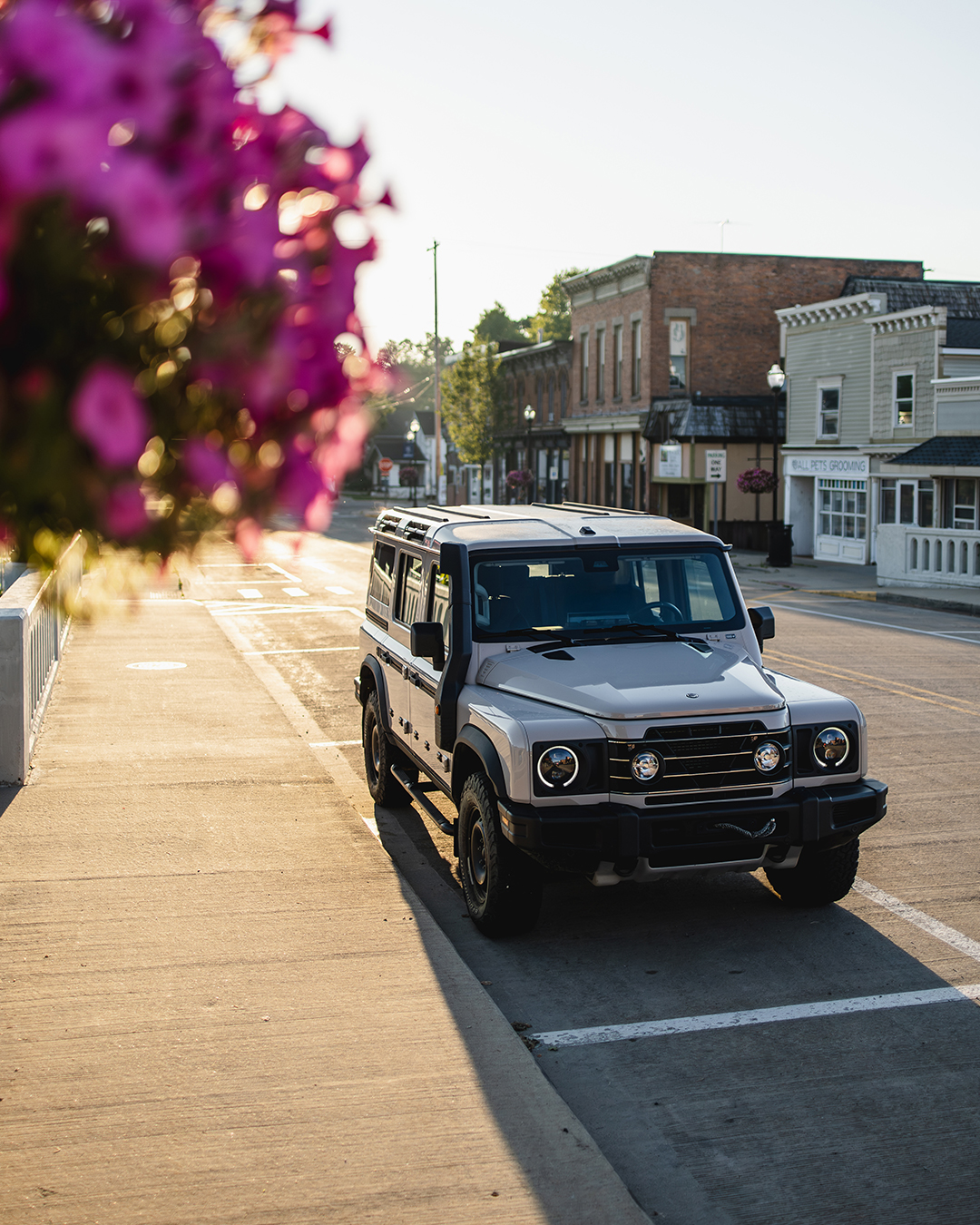
Life with the Grenadier
I purchased a 2025 Grenadier Fieldmaster. This is an upscale trim, named after a famous Belstaff motorcycling jacket. There is a base model, outfitted as its name implies, and a Trialmaster (not trail!) also named for a Belstaff coat. Ineos owns a bit of Belstaff, thus the connections. Donny Grey Metallic was the color of choice.
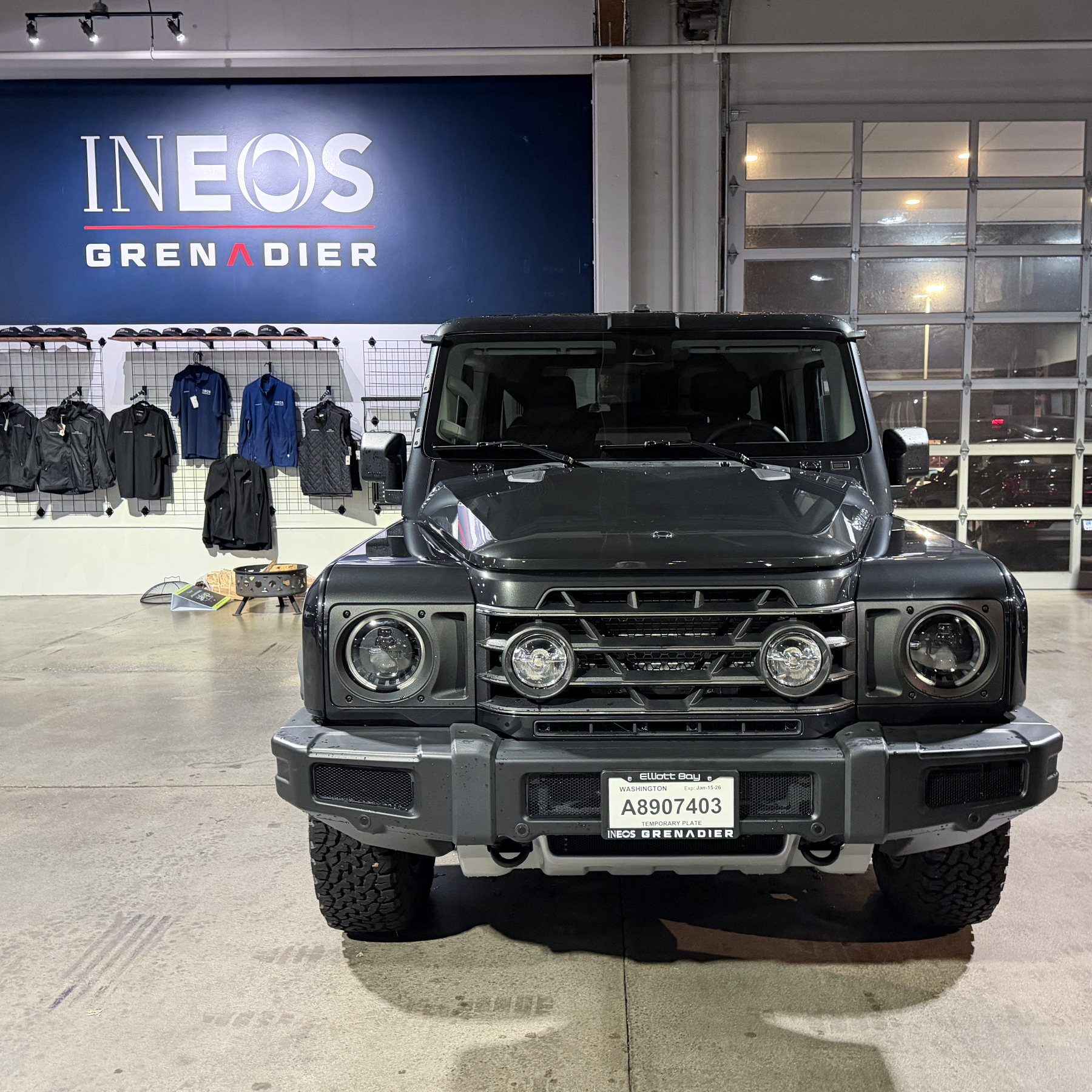
Overall, I love the Fieldmaster. But life is not a bed of roses with it. There are some expected nits, like vague steering and an HVAC system that seems constantly confused. But far and away the biggest problems with Grenadier ownership is - ironically - the software.
In the tech industry, one measure of software quality is “defects per KLOC” or the number of software problems per thousand lines of code written. Despite Ineos’ goal of reducing the software footprint in their vehicles, I suspect they have one of, if not the, worst defects/KLOC rates in the automotive industry right now. Some of this may result from their team being new and inexperienced with software development. They might have outsourced too much of their functionality. I suspect much of it has to do with them moving too fast into too many markets. The result is comical:
- Ineos shipped an overspeed warning, which annoyingly chimes when a driver exceeds the posted speed limit. Every. Single. Time. This is not required in the U.S., their largest market by far. Not only did they neglect to turn it off for U.S.-bound vehicles, but the software didn’t provide a way to permanently disable it. Fortunately, this has been fixed with a software update.
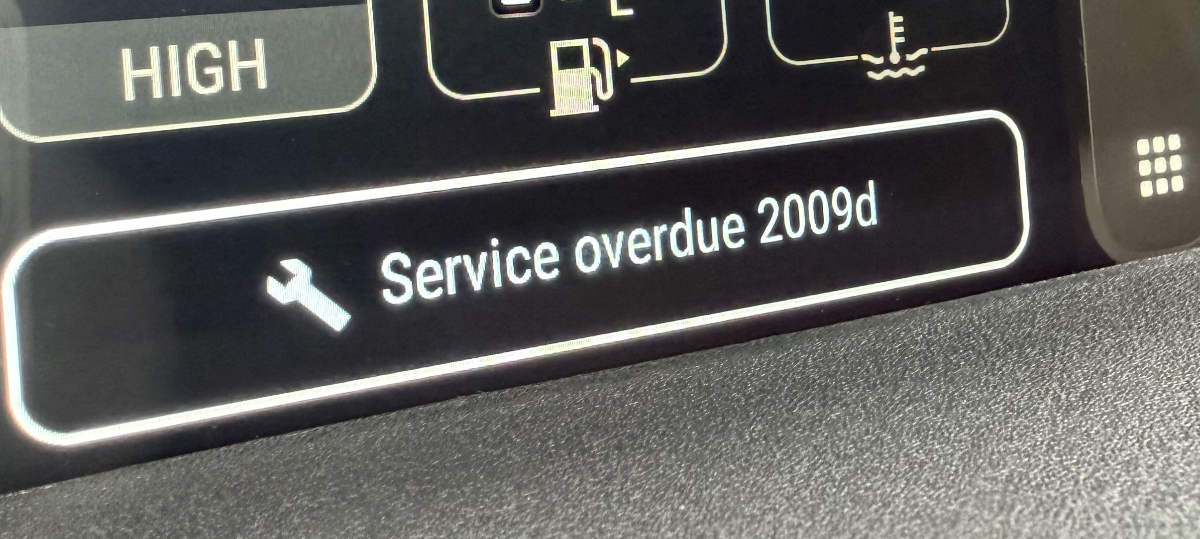
- January 1, 2026 brought a Y2K-like bug. Every Grenadier on the planet began flashing an alert that the vehicle was thousands of days overdue for service. Even the Grenadiers built that day. Basic quality assurance is lacking. A month later, there is still no fix; all Grenadiers scream at their owners to perform maintenance that isn’t really due every single time they turn the key.
- Every software problem requires a visit to the dealership. As a new manufacturer, dealerships are sparse. Some owners drive hours for basic service needs. Worse, the software update process takes a full day (my last one was 7 hours). Ineos decided to not include a mechanism for over-the-air (OTA) software updates. Nobody wants their car bricked via a remote update, but lack of OTA updatability is incredibly expensive for Ineos. I don’t think it’s a tenable situation.
Annual services will cost around $1200 in Seattle, far more than the minimal maintenance that my EVs required. I’m OK with that given how much I love the truck.
The Grenadier has delivered what I had hoped: A purposefully-built 4x4 with design and engineering guided by the principle of being a spiritual successor to the legendary Defender. The balance between analog and digital makes for a cockpit that’s a thrill to sit in and a vehicle that you actually drive, for better or worse. It addressed my need for a smaller truck while being surprisingly capable at diverse uses.
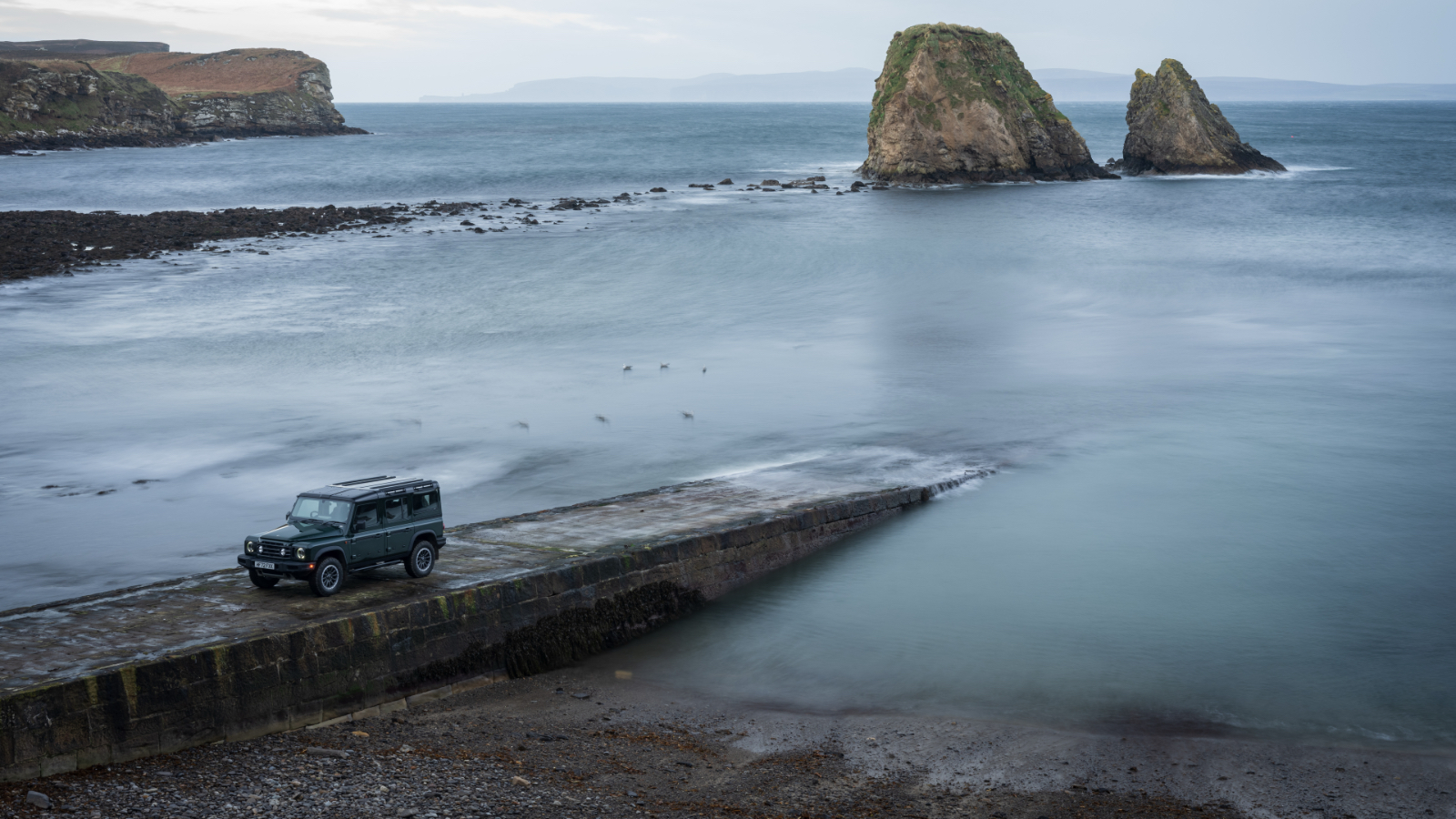
To the right eye, it’s also one of the most beautiful new vehicles on the road today. A Grenadier may not be as sleek as most, nor as efficient, nor as automated. Neither am I!
Cheers to purpose, and the right measure of analog in all of our lives.
February 01, 2026